
Wheel Alignment in San Antonio, TX
Wheel Alignment in San Antonio, TX
What Happens When Your Wheels Stop Working Together
How Proper Alignment Improves Performance and Comfort
If your car has been pulling to one side, or you’ve noticed your steering wheel sitting slightly off-center even when driving straight, your vehicle may be telling you something important. At Finsanto Tire & Auto Repair, we hear these concerns from drivers across San Antonio, TX, every week. The good news is that a professional wheel alignment service is one of the most straightforward ways to restore your vehicle’s handling, protect your tires, and improve your overall driving safety. Wheel alignment is about more than keeping your vehicle driving straight. It ensures each wheel is positioned at the precise angle specified by the manufacturer, allowing your tires, suspension, and steering system to work together for safe, predictable handling. When those angles drift even slightly, the effects compound over time, leading to accelerated tire wear, reduced fuel efficiency, and added stress on your suspension and steering components. Many drivers are surprised to learn that something as routine as hitting a pothole or a curb can be enough to knock a vehicle out of alignment, making periodic alignment checks a smart part of any maintenance routine. Ignoring the warning signs doesn’t make the problem go away; it typically makes it more expensive to address later.
Understanding the Four Angles of Proper Alignment
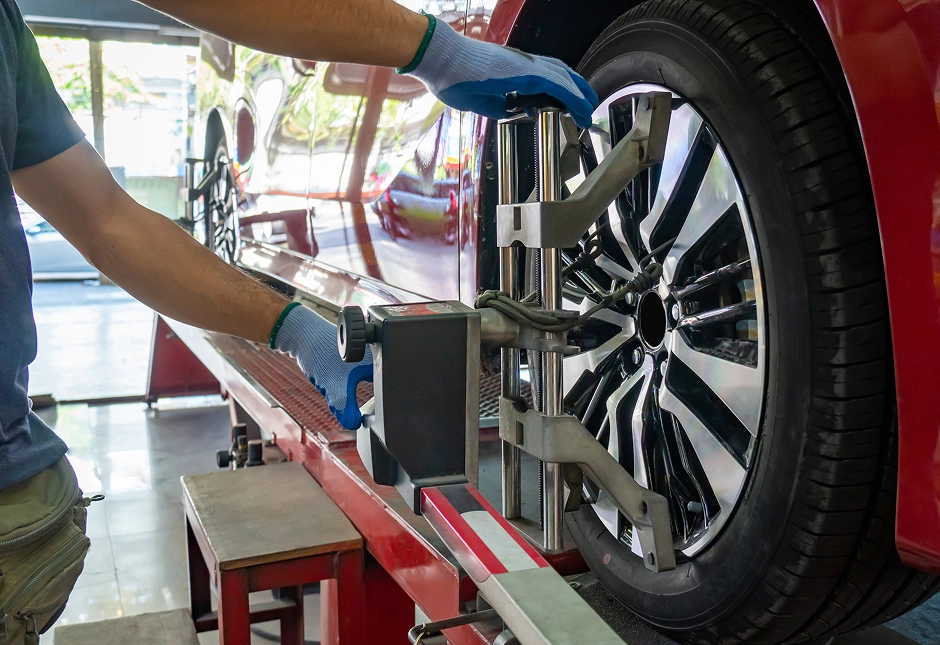
A complete four-wheel alignment service involves measuring and adjusting several key angles that determine how your tires contact the road surface. Toe adjustment refers to whether your tires point slightly inward or outward when viewed from above, and even a small deviation here can cause rapid, uneven tire wear across the inner or outer edges of your tread. Camber adjustment addresses the vertical tilt of your tires when viewed from the front of the vehicle; a wheel that leans too far inward or outward places uneven load on the tire and can signal worn suspension components. Caster angle relates to the steering axis tilt as viewed from the side of the vehicle, which directly affects steering stability and your vehicle’s tendency to return to center after a turn. The thrust angle is a less commonly discussed but equally important measurement that ensures all four wheels are properly aligned with the vehicle’s centerline, preventing the “dog-tracking” sensation in which the rear of the car seems to follow a slightly different path than the front. At Finsanto Tire & Auto Repair, our technicians use a precision alignment machine to measure all of these angles simultaneously and compare them against your vehicle’s manufacturer specifications, not generic averages. This approach ensures your car’s alignment is calibrated to how your vehicle was engineered to perform, whether you drive a compact sedan, a full-size truck, or an SUV.
Knowing the Signs to Schedule Service
Beyond the obvious symptom of a vehicle pulling to one side, several other warning signs suggest your vehicle is due for a tire alignment service. Uneven or unusually rapid tire wear is one of the most telling indicators, particularly when one edge of a tire wears down significantly faster than the other. Steering wheel vibration at highway speeds, squealing tires when turning through a parking lot, and a steering wheel that doesn’t return smoothly to center after a turn are all worth paying attention to. If you’ve recently had suspension work completed, including new struts, control arms, or tie rods, scheduling an alignment check immediately afterward is strongly recommended, since replacing suspension components almost always affects alignment angles. Finsanto Tire & Auto Repair also pairs alignment services with related services like tire rotation, tire balancing, and tire pressure adjustment to give your tires the best possible chance at lasting their full expected lifespan. Our ASE-certified technicians will walk you through the alignment report, so you understand exactly what was measured, what was adjusted, and why, because transparency is something we take seriously at every visit. To schedule your next alignment, check or to ask questions about your vehicle’s handling, call us at (210) 684-2277 or stop by our shop at 9354 Bandera Rd, San Antonio, TX 78250 during business hours, Mon – Fri: 7:30am to 6pm.
Frequently Asked Questions
Have Questions? We Have The Answers!
Most vehicle manufacturers and industry professionals recommend an alignment check every 12 months or 12,000 miles, whichever comes first. You should also schedule an alignment check after hitting a significant pothole, curb, or road debris, or any time new suspension or steering components are installed on your vehicle.
Wheel alignment adjusts the angles of your tires relative to the road and to each other, correcting issues like pulling or uneven wear. Tire balancing addresses weight distribution within the wheel-and-tire assembly, which typically causes vibration at certain speeds. Both services are important, but they address different problems.
Yes. Misalignment is one of the leading causes of premature tire wear. When the toe, camber, or thrust angle is off, certain portions of the tire tread carry more load than they should, wearing down unevenly and significantly reducing the tire’s usable lifespan. Correcting alignment early helps protect your tire investment.
A standard four-wheel alignment service typically takes between 45 minutes and one hour for most vehicles. If worn or damaged steering components or suspension components are discovered during the process, additional repair time may be needed before the alignment can be properly completed and hold its adjustment.
Most drivers notice an immediate improvement in their vehicle’s handling after a proper car alignment. Steering tends to feel more responsive, the vehicle tracks straighter without correction, and the steering wheel sits centered. Over time, you should also see more even tire wear and potentially improved fuel efficiency.
